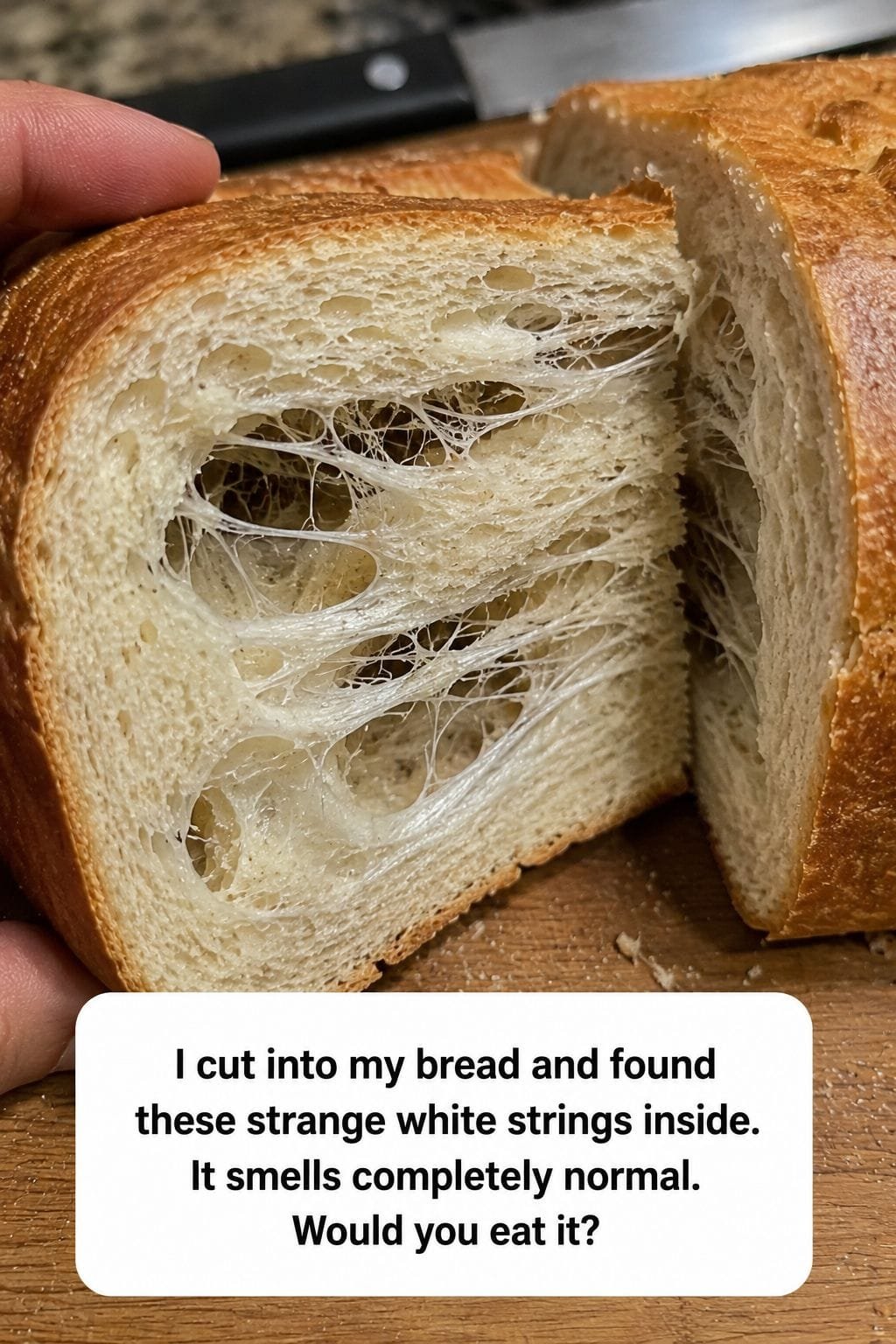
You slice into a fresh-looking loaf expecting the usual soft, fluffy center—and suddenly notice something that looks completely different.
Thin white strands appear to stretch through the inside of the bread, almost like tiny threads or webbing.
The first thought might be: Is this mold? Is the bread spoiled? Or is this actually something that can happen naturally during baking?
The good news is that not every unusual-looking texture automatically means mold. But unusual changes in bread are worth examining carefully before taking another bite.
What Could Those White Strings Be?
Bread dough contains gluten, a network of proteins that develops when flour and water are mixed and the dough is worked.
During fermentation and baking, this structure helps trap gas produced by yeast, creating the familiar holes and stretchy texture of bread.
Some breads can therefore have stringy, stretchy or web-like-looking structures when pulled apart, particularly when the crumb is moist and elastic.
However, the appearance alone isn’t enough to determine whether a particular loaf is safe.
If the strands look slimy, unusual for the type of bread, or appear together with other signs of spoilage, it’s better not to take chances.
Is It Mold?
Mold doesn’t always immediately look like the classic green or blue fuzzy patches people expect.
According to FDA food-safety educational material, mold can grow into food beyond the visible surface, and some molds can produce toxins.
That’s particularly important with soft foods.
Bread is soft and porous, so if you actually see mold, simply cutting away the visible spot isn’t a reliable way to make the rest of the loaf safe.
If you see obvious mold on bread, the safest choice is to discard the loaf rather than cutting around the affected area.
Look for These Warning Signs
Before deciding whether unusual bread is worth eating, check the entire loaf.
1. Strange Colors
Green, blue, black, pink, or unusual orange discoloration can be a warning sign.
A normal bread crumb can vary in color depending on the ingredients, but a new unexplained patch deserves caution.
2. Fuzzy Growth
A fuzzy or hairy appearance is much more concerning than ordinary bread fibers.
Mold can initially appear in relatively small areas and may spread beyond what you can see.
3. Unusual Smell
Bread that smells strongly musty, sour, fermented in an unexpected way, or simply “wrong” should not be tasted to test it.
FDA guidance specifically advises against tasting food that looks or smells strange to determine whether it’s still usable.
4. Slimy or Wet Texture
A noticeably slimy interior is different from normal stretchy bread.
If the texture has changed dramatically along with an unusual smell or discoloration, it’s safer to discard it.
What If the Bread Looks Completely Normal?
If the bread is fresh, properly stored, has no visible mold, and the strands are simply part of its normal stretchy crumb structure, the appearance may not indicate spoilage.
Some breads naturally have a more elastic crumb than others.
Freshly baked bread can also have a moist interior that stretches when pulled apart.
That’s why one unusual visual feature isn’t enough to identify what’s happening with certainty.
The type of bread, ingredients, storage conditions, age, smell, texture, and appearance all matter.
Don’t Rely Only on the Expiration Date
A date printed on a package doesn’t automatically tell you whether bread is safe.
FDA explains that food date labeling can be confusing and that consumers should also pay attention to noticeable changes in color, consistency, and texture.
So a loaf that’s technically within its date can still have a spoilage problem if it was stored improperly.
Likewise, a loaf past a quality date isn’t automatically dangerous solely because of the date.
The condition of the food matters.
How Should Bread Be Stored?
Proper storage can help slow quality deterioration.
Keep packaged bread sealed according to the manufacturer’s instructions and avoid exposing it unnecessarily to moisture.
If you live in a warm or humid environment, bread can develop spoilage more quickly.
For longer storage, freezing can be a useful option. Frozen bread can generally be thawed when needed rather than being left at room temperature for an extended period.
What Should You Do If You See Mold?
Don’t scrape the spot off and continue eating the loaf.
Because bread is porous, visible mold can extend beyond the area you can see. FDA educational guidance recommends discarding most moldy foods and emphasizes that mold can penetrate soft foods.
Also avoid smelling the mold closely or tasting the suspicious area.
If the bread was part of a packaged product and you believe there may be a quality or safety issue, keep the packaging and product information available in case you need to contact the manufacturer.
The Bottom Line
Those strange white strands inside bread aren’t automatically proof of mold.
They could potentially be related to the bread’s structure, particularly if the loaf is fresh and otherwise looks, smells, and feels normal.
But if the unusual strands are accompanied by mold, strange colors, a musty odor, slime, or other obvious spoilage, don’t eat it.
When you’re genuinely unsure about a suspicious food, the safest rule is simple:
When in doubt, throw it out.
And that’s exactly why a strange-looking loaf can make such a good kitchen mystery—what looks alarming at first isn’t always what you think, but food safety is not something worth guessing about.