
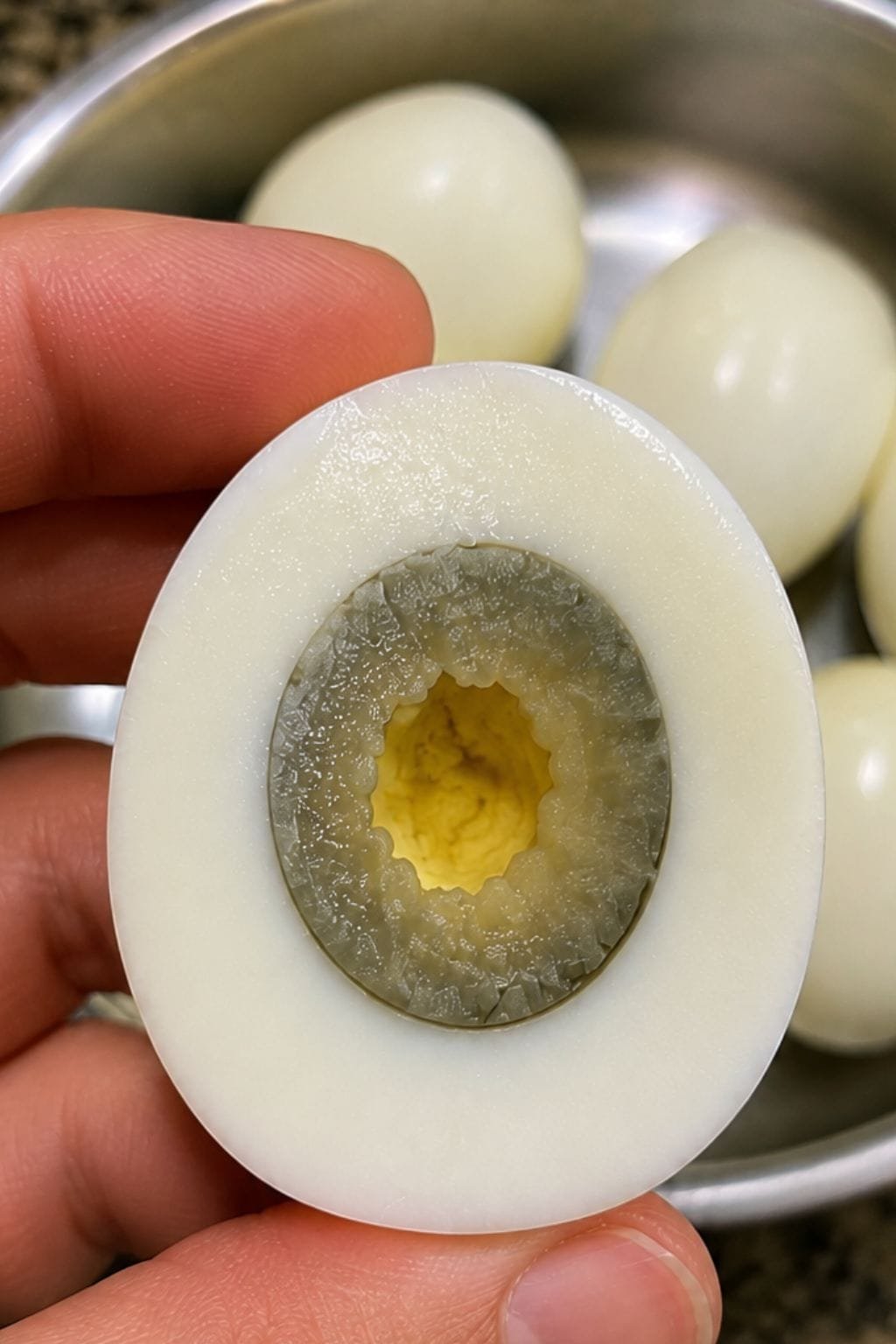
Why Does a Hard-Boiled Egg Have a Green or Gray Ring Around the Yolk?
You cut open a hard-boiled egg expecting to see a bright yellow yolk, but instead there is a strange grayish-green ring around it.
At first glance, it can look like something is wrong with the egg.
The good news is that a green ring around an otherwise normally cooked egg yolk is usually caused by a cooking reaction, not mold or spoilage. The reaction happens between sulfur compounds in the egg white and iron in the yolk.
But there are still a few important food-safety rules to know.
What Causes the Green Ring?
Eggs naturally contain sulfur in the whites and iron in the yolks.
When an egg is cooked for too long or at too high a temperature, these compounds can react near the boundary between the white and yolk. This can create the familiar greenish-gray ring.
The University of Illinois Extension explains that the reaction becomes more noticeable when eggs are overcooked, cooked at excessive heat, or cooled too slowly.
So that strange color isn’t necessarily a sign that your egg has gone bad.
It’s often simply a sign that the egg was cooked longer or hotter than necessary.
Is a Green Ring Dangerous?
A green ring by itself isn’t generally considered a food-safety problem.
Illinois Extension notes that the sulfur-and-iron reaction responsible for the green color does not affect the flavor or wholesomeness of the egg.
The USDA’s hard-cooked egg quality guidance, however, treats green or gray discoloration as an undesirable quality characteristic. In other words, it isn’t the appearance you want from a properly prepared hard-cooked egg, even though the familiar green ring can result from overcooking.
That’s an important distinction:
Unattractive doesn’t automatically mean unsafe.
Why Does the Yolk Sometimes Look Gray?
The same basic cooking reaction can produce grayish coloring around the yolk.
If the egg is cooked aggressively, the outer portion of the yolk can develop a gray or green tint.
The longer the egg remains exposed to high heat, the more noticeable the reaction can become.
That’s why perfectly cooked hard-boiled eggs generally have a clean white exterior and a yellow yolk without a pronounced green ring.
What About a Hole in the Yolk?
A hole or unusual cavity is different from a simple green ring.
Egg yolks can sometimes have irregular shapes or textures after cooking, but an unusual cavity shouldn’t automatically be assumed to be caused by the same sulfur-and-iron reaction.
If an egg has unusual discoloration throughout the egg, an unpleasant odor, sliminess, mold, or other signs of deterioration, don’t rely on the green-ring explanation.
When food looks or smells genuinely spoiled, it’s safer to discard it.
How to Prevent the Green Ring
The easiest solution is to avoid overcooking the eggs.
USDA’s current instructions for hard-cooking eggs recommend placing eggs in a saucepan, covering them with water, bringing the water to a boil, then using controlled standing time depending on egg size. USDA also recommends cooling the eggs promptly afterward and refrigerating them within two hours.
For example, USDA lists approximately:
- Medium eggs: 12 minutes
- Large eggs: 15 minutes
- Extra-large eggs: 18 minutes
After cooking, run cold water over the eggs and cool them promptly.
Illinois Extension gives another method: bring covered eggs to a boil, remove them from the heat, let them stand for about 11–13 minutes, then chill them in ice water.
Different methods can work, so the key is controlled cooking followed by rapid cooling.
Does Egg Age Cause the Green Ring?
Egg freshness can affect some characteristics of hard-boiled eggs, particularly how easily they peel, but the classic green ring is primarily associated with the cooking process.
USDA notes that very fresh eggs can actually be more difficult to peel after hard cooking.
So if your egg has a green ring, don’t immediately assume it was old.
It may simply have spent too much time cooking.
How Long Are Hard-Boiled Eggs Safe?
Proper storage matters much more for food safety than whether the yolk has a green ring.
USDA recommends refrigerating cooked eggs promptly and says hard-cooked eggs can be kept safely in the refrigerator for up to 7 days.
USDA also recommends not leaving eggs out of refrigeration for more than two hours.
If you’ve peeled the eggs, keep them refrigerated in a clean, covered container.
What If the Egg Smells Bad?
That’s a different situation.
A normal hard-boiled egg can have a noticeable sulfur smell, especially immediately after cooking. But if the egg has a distinctly unpleasant or rotten odor, unusual slime, mold, or other obvious signs of spoilage, don’t eat it.
The green ring alone doesn’t give you enough information to judge every egg.
Consider the whole picture: appearance, smell, texture, storage, and how long the egg has been refrigerated.
The Bottom Line
That strange green or gray ring around a hard-boiled egg yolk can look alarming, but it is commonly caused by a harmless chemical reaction between sulfur in the egg white and iron in the yolk during cooking.
It usually means the egg was cooked too long, at too high a temperature, or wasn’t cooled quickly enough.
For better-looking eggs, use controlled cooking times and cool them promptly.
And if you’re ever dealing with an egg that has mold, an abnormal rotten odor, sliminess, or other signs of spoilage, don’t take chances—throw it away.
That little green ring may look scary, but sometimes the strangest-looking part of your food has the simplest explanation.